Skip to content
SIMS Technologie

Togo · Gabon · Côte d’Ivoire

Software Development for Public Institutions

We design and run the systems a public service depends on day to day: safety, revenue collection, case handling. We stay with the deployment after it goes live.

A development team gathered around a laptop during a project review

Our systems are the direct result of the right team, the right architecture, and staying with the deployment after it ships.

An institution does not replace its system every two years. It needs software it understands, can extend, and can take back into its own hands. That constraint is where our design starts.

Presence

Where we deliver

Three countries, serving public institutions and the companies that work alongside them.

  • Togo

  • Gabon

  • Côte d’Ivoire

Sectors

Sectors we build for

Every sector below is backed by a system in production or a real client.

  • Public safety
  • Local government
  • Business representation
  • Civil engineering and construction
  • Agro-industry

Capabilities

Our core capabilities

    • TypeScript
    • JavaScript
    • PHP
    • Python
    • React
    • Next.js
    • Laravel
    • Node.js
    • PostgreSQL
    • MySQL
    • Flutter
    • Android
    • iOS
    • Document extraction
    • Search
    • Assistants
    • APIs
    • Reporting
    • Integrations
    • Data recovery
    • Digitisation
    • Migration
    • On-call
    • Fixes
    • Training

What we build

Two systems in production

Each one serves a public institution and is running today.
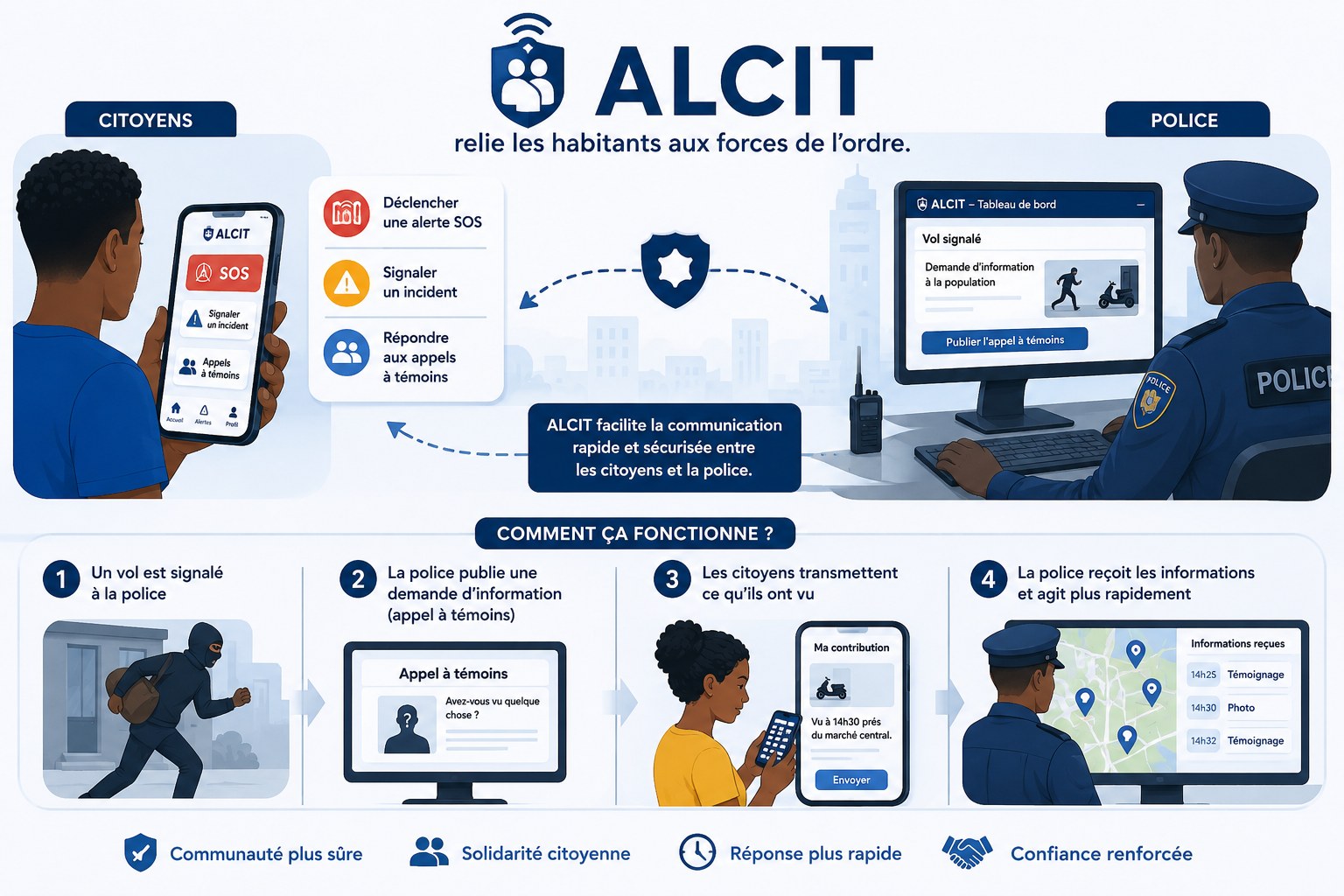
Diagram explaining ALCIT: a citizen raises an alert or reports an incident from their phone, the police publish an appeal for information from their dashboard, and what residents send back reaches them timestamped

ALCIT

Alerte Citoyenne — citizen alert

ALCIT connects residents to the police. A resident can raise an SOS, report an incident, and answer appeals for information the police publish. When a robbery happens, the police post a request for information and citizens contribute what they saw.

Used by: Security forces and residents
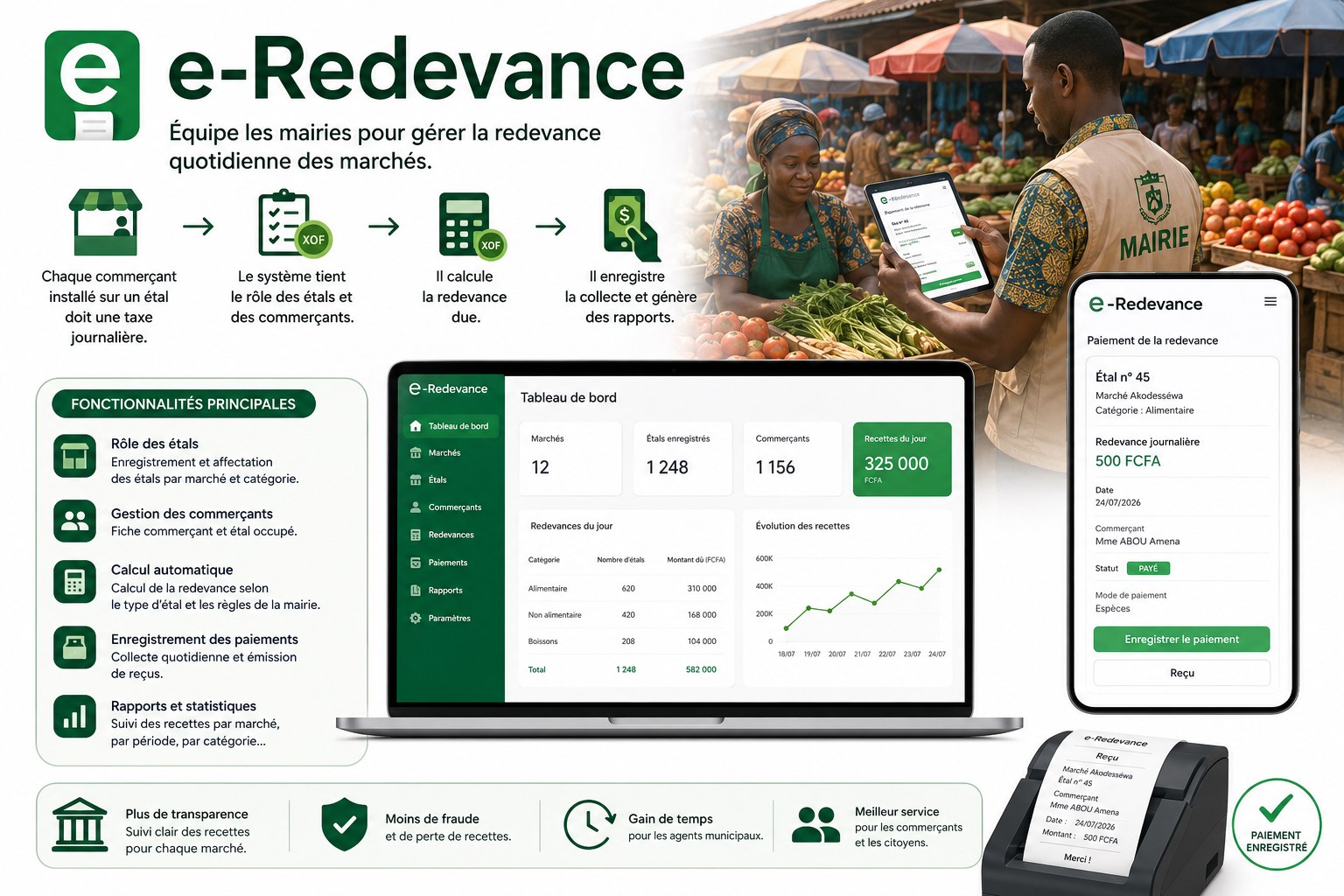
Diagram explaining e-Redevance: the system maintains the roll of stalls and stallholders, assesses the daily levy due, records collection in the field, and produces revenue reports for the town hall

e-Redevance

Market levy management and collection

e-Redevance equips a town hall to run the daily market levy. Every stallholder in a municipal market owes a daily tax. The system maintains the roll of stalls, assesses the levy due, and records collection.

Used by: Town halls and market authorities

Method

How an engagement runs

  1. 01

    Scoping

    We describe the system, its users, and the constraint that matters most. You leave with a written scope even if you stop there.

  2. 02

    Pilot

    One real slice in production, with real users, before anyone commits to the full build.

  3. 03

    Rollout

    Scaled site by site or department by department, with data migration and team training.

  4. 04

    Custody

    We stay accountable for the system: fixes, changes, and handover whenever you choose.

Every deployment ships with its source, its documentation and a rehearsed handover.

This is not an end-of-contract extra. It is how we deliver from the first day.

Staff seated around U-shaped tables during a handover workshop, folders and documents in front of them

White label

Deliver under your own name

We build for agencies and consultancies that hold the client relationship. Your name on the product, our team behind it.